About the research
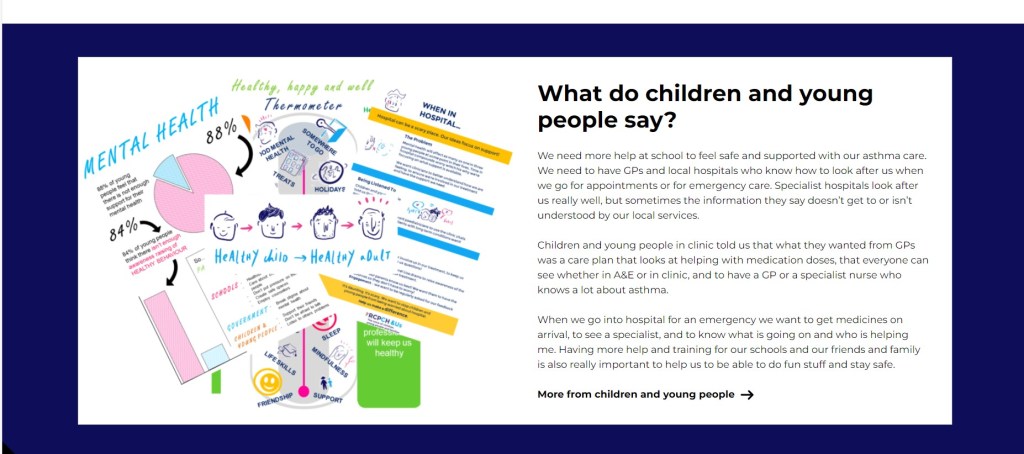
Screenshot from the Royal College of Pediatric and Child Health(RCPCH) Website – Asthma – RCPCH – State of Child Health
Q. What do we know so far?
Ans. 1. Asthma is one of the most common long-term lung conditions among children and young people
2. It is also known as an ambulatory care-sensitive condition, i.e., with adequate primary care interventions, hospital admission could be prevented
3. Asthma is still one of the top ten reasons for emergency hospital admissions in children and young people in the UK
4. Studies suggest that while early childhood asthma is more common in boys, a reversal occurs in adolescents and adulthood
5. Several other studies also indicate a strong link between sudden severe asthma attacks and deprivation.
Q. What is this research all about?
Ans. This is a four-stage Postgraduate research which aims to find out if there is any difference in the experiences of young people based on who they are and where they are from when they use unscheduled emergency asthma care e.g., NHS 111 or 999 calls, unscheduled GP appointments, emergency department visits for a sudden severe asthma attack in Wales, UK. The four stages are as follows:
Stage 1 – Finding out what information is available (published) in research books (journals)
Stage 2 – Separate One-to-one WhatsApp text, video call or face-to-face conversation (interview) with young people living with asthma who have used unscheduled emergency asthma care (111 calls, unscheduled GP appointments, emergency department visits) for a sudden severe asthma attack and their parents/guardians, and asthma healthcare providers
Stage 3 – Analysing unidentifiable (anonymous) GP and hospital ED information of young people to find out what is stored in the records regarding sudden severe asthma attacks
Stage 4 – Combine the results found in stage 1, 2 and 3 and Write the final report
Q. Why is this research being done?
Ans. To empower young people living with asthma to manage their health conditions and navigate the system better and to involve more children and young people in research.
Q. When will the research begin and possibly finish?
Ans. This postgraduate research is being done from October 2023 to October 2026.
Q. Who has funded this research?
Ans. This postgraduate research is funded by Economic and Social Research Council (ESRC) Wales Graduate School of Social Sciences (WGSSS) Doctoral Training Programme (DTP) via the Health data science pathway at Swansea University Medical School.
Q. Who has reviewed this research?
Ans. This research is reviewed, and approved by the Faculty of Medicine, Health and Life Sciences Research Ethics Committee of Swansea University,2 2025 8976 13684
 Asthma In Young Person Research